Plywood grain direction: when it matters and what it costs
October 31, 2026 · 6 min read
Plywood looks like it has no direction. Then you hang two doors and see the grain running sideways on one of them. Knowing which parts need to follow the grain, and which do not, saves both the look of the project and material.
How to read a sheet
Plywood is built from an odd number of veneer layers with the grain crossing at 90° from one to the next. The two outer layers run the same way, and on most sheets that is along the long side. Panels are stronger and stiffer in that direction, called the strength axis.
Do not assume, though. Some panels are made with the face grain across the sheet. Look at the face before you plan, and when ordering a special veneer ask which way it runs.
Which parts to lock
| Part | Lock the grain? | Why |
|---|---|---|
| Doors and drawer fronts | Yes | They are seen side by side, and a change in direction shows from across the room. |
| Tall visible sides | Yes | Vertical grain is what the eye expects on a cabinet side. |
| Shelves with a long span | Yes | Run the face grain along the span so the shelf uses the strength axis. |
| Tops and visible panels | Usually | Run the grain along the longer side, unless the design calls for something else. |
| Fixed bottoms, stretchers, toe kicks | No | Mostly hidden, and these are the parts that make a layout fit. |
| Backs, drawer bottoms, jigs | Usually no | Unless you can see them from the front of an open case. |
| MDF and melamine | No | Plain panels have no grain, so every part can turn. A printed wood-grain surface still does. |
What it costs
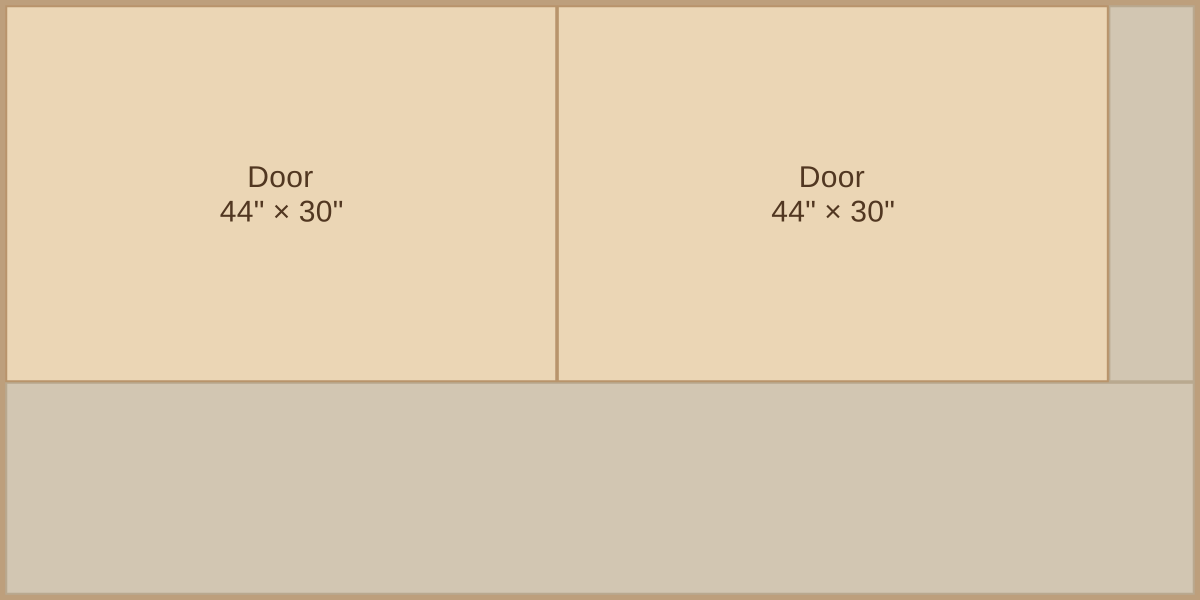
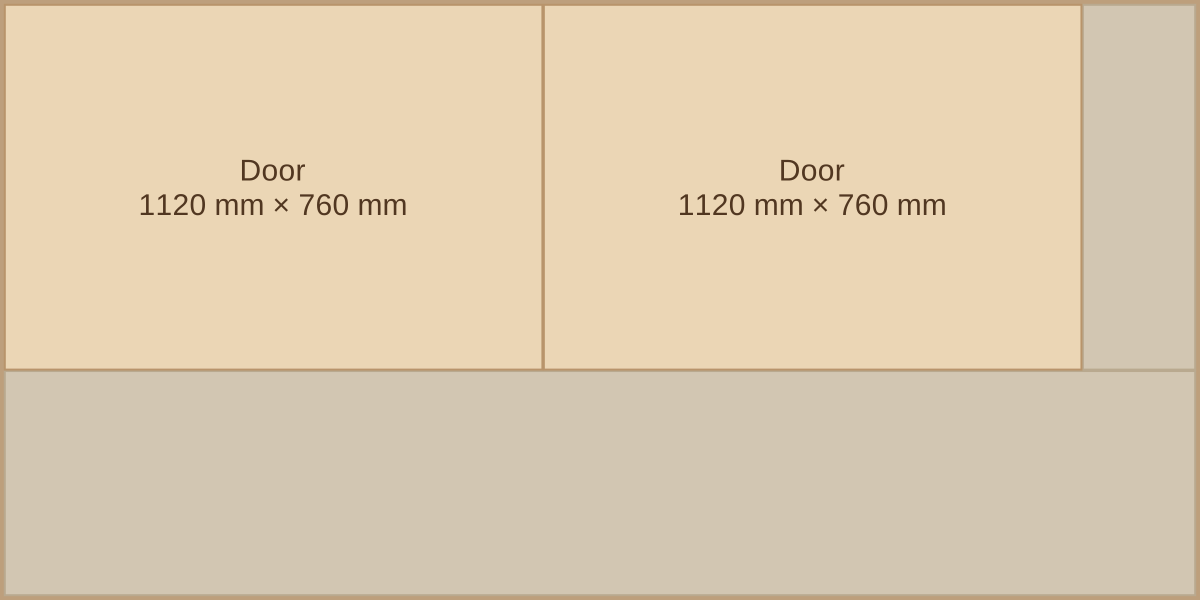
Sometimes nothing. Our 72"1830 mm bookcase needs 2 sheets with its grain rules and 2 with every part free to turn. Sometimes it costs a sheet. Six doors, 44" tall and 30" wide1120 mm tall and 760 mm wide, on 4×8 ft (96 × 48")2500 × 1250 mm sheets:
Grain locked: 3 sheets, 43% waste
Free to turn: 2 sheets, 14% waste
Grain locked: 3 sheets, 46% waste
Free to turn: 2 sheets, 18% waste
With the grain running up the door, a sheet takes only two doors along its length, and the 47"1230 mm usable width leaves 17"470 mm unused. Turned sideways, three doors sit in a row along the sheet. That is 1 extra sheet to keep the grain vertical on a set of doors, which is usually worth paying for. It is not worth paying for on the inside of a cabinet nobody sees.
Paying less for it
- Lock only what shows. Every part you leave free gives the layout another option.
- Change a size where you can. Running the grain across the door, at 30" along the grain and 44" across it760 mm along the grain and 1120 mm across it, also takes 2 sheets. Horizontal grain can be a deliberate design choice.
- Cut visible parts from one sheet. Veneer color varies from sheet to sheet and even within one. Laying matching doors out side by side, in order, gets you a continuous pattern. Number them as they come off.
- Check a supplier's sheet sizes. A longer sheet or one with the grain across can change the answer for a job with a lot of wide parts.
Every layout and sheet count in this guide was calculated by the optimizer inside Plyplan.